
Pratibha | Gopal Chhotray
Review by Madhusmita Jena
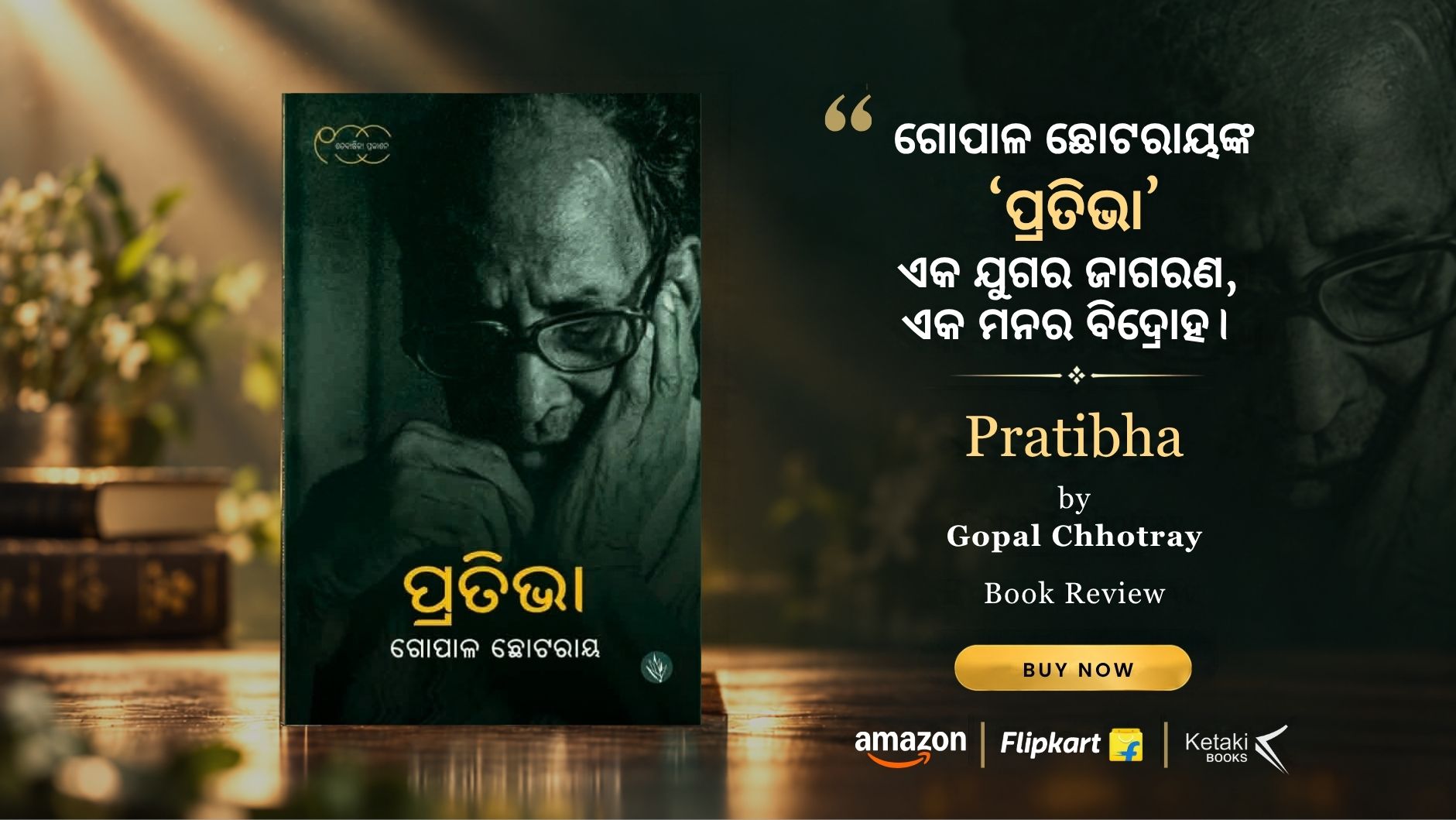
If one has grown up listening to Odia theatre, reading Odia literature, and carrying a little affection for the old voices of Odisha, Gopal Chhotray is not merely a playwright one remembers. He is a voice one recognises. There is something wonderfully alive in his writing, the ease of conversation, the mischief in an ordinary exchange, the sudden turn from laughter to something deeply serious. Pratibha carries all of that.
First published in 1962, Pratibha takes us back to 1921, into a village touched by the Non-Cooperation Movement. But Chhotray does not write history as a procession of famous names and slogans. He brings it home. It enters a schoolroom, a landlord’s house, a marriage negotiation, a young man’s restless heart. Mahendra, Raghu Master, Nabina, Prakash and, above all, Pratibha become people caught in a time when the old order was beginning to feel its first tremors.
And Pratibha herself is perhaps the most moving part of that world. A girl whose education is treated almost as an inconvenience gradually discovers another kind of education, the awakening of selfhood. When she declares herself a soldier in Gandhi’s satyagraha, the moment feels larger than the movement itself. It is a young woman discovering that her life need not remain confined to the walls others have built around her.
There is humour too, and argument, and that wonderfully Chhotray-like irreverence. “Arm Chair Politics” appears almost casually, yet it catches the discomfort of those who speak of change until change asks something of them.
That is Gopal Chhotray, the ability to make a period speak in the language of living people.
Pratibha is therefore more than an old play brought back to the shelf. It is Odisha remembering itself.
And through its republication, Ketaki Books helps keep that voice within reach of another generation.
Contact & Enquiries
- 📧 ketakibooks@gmail.com
- 📧 ketakifoundationtrust@gmail.com
- 📞 +91 9777040950